
Hiring a construction manager can give the owner dedicated oversight of the project’s budget, schedule, communication, trade coordination, and field progress. The main benefits are earlier visibility into cost changes, better coordination between project phases, clearer accountability, more consistent site oversight, and less day-to-day management burden for the owner.
The real question is not simply who will perform the construction work. It is who will keep the budget, design, schedule, consultants, contractors, and owner decisions moving in the same direction from planning through completion.
M-Cubed Design & Building provides construction management through an owner-led design-build process that connects pre-construction planning, design, engineering, permitting, and construction under one coordinated team. The level of oversight depends on the project’s scope and complexity, but the purpose remains the same: give the owner clearer information and stronger control as the project moves forward.
This guide explains what a construction manager does, how the role differs from general contracting and self-management, and when dedicated construction management may be worth the additional cost.
Here is the Quick Answer:
The main benefits of hiring a construction manager include:
- Ongoing budget tracking rather than reliance on one early estimate.
- Better schedule visibility and coordination between dependent activities.
- One organized point of communication across the project team.
- More consistent site oversight while work remains visible.
- Better alignment among design, engineering, and construction.
- Less day-to-day administrative burden for the owner.
- Greater attention to durability, maintainability, and long-term project priorities.
Construction management adds a professional-service cost and is not necessary for every project. Its value generally increases as the number of trades, consultants, approvals, technical decisions, and project phases grows.
What does a construction manager actually do?
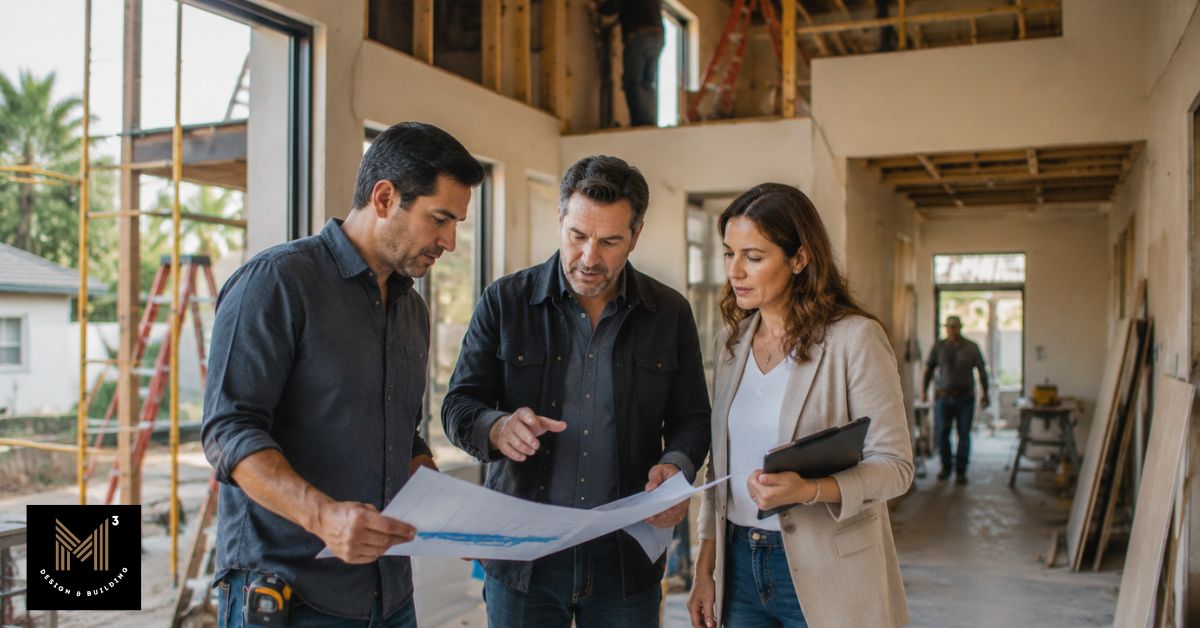
Construction management is an ongoing coordination and oversight function that continues from early planning through pre-construction and active construction rather than a single task performed at one point in the project.
In practice, this means reviewing budgets, coordinating schedules, resolving information gaps between project participants, monitoring field progress, and helping owners make informed decisions before issues become more difficult or costly to address.
Depending on the project’s delivery structure, the construction manager coordinates budgeting, scheduling, trade activities, project documentation, field coordination, and site oversight. Together, these responsibilities connect early project planning with the coordination required during construction.
Budget Development and Cost Tracking
Budget development begins during planning and pre-construction, when the project scope, design objectives, and available information are used to establish an initial project budget. As design decisions evolve, the budget is reviewed alongside proposed materials, systems, and construction approaches so budget expectations remain aligned with the current scope of work.
Cost tracking continues throughout the project by comparing current decisions against the established budget and documenting how revisions may influence overall project costs. When design modifications, scope adjustments, or unforeseen conditions arise, their potential financial implications can be evaluated before related decisions or work are finalized. This ongoing review provides an updated picture of project costs as planning and construction move forward.
Project Scheduling and Milestone Management
Project scheduling involves developing a realistic sequence of work based on the project’s scope, design development, permitting milestones, procurement needs, and construction activities. Rather than focusing on individual tasks in isolation, the schedule organizes how different phases relate to one another so work can proceed in a logical order.
As construction progresses, milestone tracking helps compare completed work with the planned sequence while identifying activities that may require adjustment or additional coordination.
Scheduling reviews may also highlight conflicts between trades, material availability, design revisions, or other project-specific circumstances that influence the planned workflow.
The schedule therefore functions as a working management tool that can be updated as project conditions change, rather than remaining fixed from the start of construction.
Subcontractor Coordination
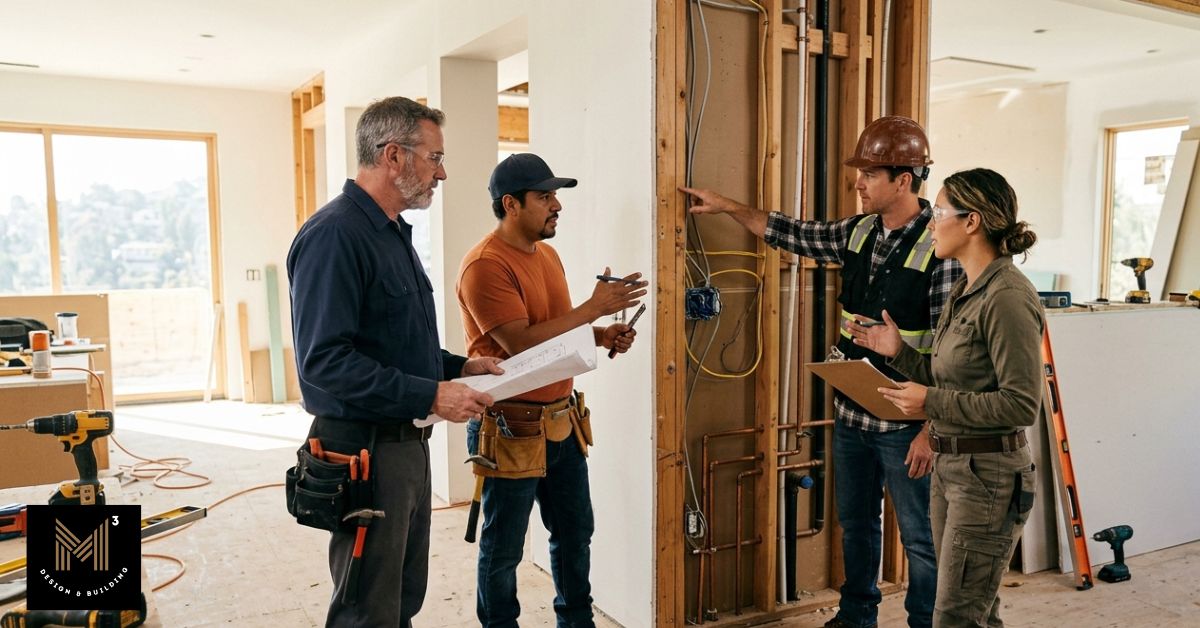
Construction management coordinates the activities of the various trades participating in a project, recognizing that contracting relationships differ depending on the selected project delivery model.
Rather than assuming responsibility for hiring every subcontractor, the role focuses on organizing how trade work is sequenced, communicated, and integrated with the overall construction plan.
This coordination includes scheduling work between trades, sharing updated project information, identifying sequencing questions for review, and helping maintain continuity as one phase transitions to the next. Because many construction activities depend on previous work being completed or verified, coordination among the relevant design, construction, and owner representatives remains an ongoing part of the role throughout the project.
The objective is to keep participants working from consistent project information as construction advances.
Quality Control and Site Supervision
Quality control and site supervision involve observing construction progress and comparing completed work with the approved project documents as construction moves forward. Field observations can help identify questions or conditions requiring review before subsequent work conceals or relies on completed construction.
When potential discrepancies or coordination issues are identified, the construction manager facilitates communication among the appropriate project participants so they can be reviewed and addressed through the project’s established processes. These activities support ongoing oversight by helping identify apparent differences between field conditions and the approved project documents so the appropriate contractor, design professional, inspector, or owner representative can review them.
They complement, but do not replace, reviews performed by design professionals, special inspectors where required, or municipal building officials.
Together, these responsibilities describe what a construction manager does throughout a project.
Understanding these responsibilities also provides the basis for distinguishing construction management from general contracting within different project delivery structures.
Construction Manager vs. General Contractor: What’s the difference?

Construction managers and general contractors both contribute to successful construction projects, but their responsibilities, contractual relationships, and level of involvement can differ depending on the selected project delivery method. Some projects may rely primarily on a general contractor, while others incorporate construction management from the earliest planning stages, and some combine both roles.
Understanding how each role is structured helps homeowners and investors evaluate how project coordination, planning, and construction responsibilities are organized for a particular project.
How a General Contractor’s Role Is Structured
A general contractor is typically responsible for executing the construction work under the project contract. That commonly includes managing field operations, coordinating subcontractors, overseeing construction sequencing, and implementing the approved plans. Depending on the contract structure, responsibilities such as procurement and purchasing may also fall within the contractor’s role.
General contractors also coordinate with owners and design professionals when questions arise during construction. Their exact responsibilities depend on the contract and delivery model, but the role is generally centered on building the project.
How a Construction Manager’s Role Is Structured
A construction manager is typically engaged to manage the project on the owner’s behalf across cost, schedule, coordination, quality, documentation, and decision-making. Involvement may begin during planning and design, before a general contractor would traditionally mobilize for construction.
That does not mean the construction manager always replaces the general contractor. On some projects, the two work alongside one another. In other delivery models, including CM-at-risk or design-build, construction-management and contracting responsibilities may be combined within the same organization.
The practical distinction is therefore one of primary focus: the general contractor is usually responsible for executing the work, while construction management provides broader oversight of how the project’s design, budget, schedule, participants, and construction activities remain coordinated.
In M-Cubed’s design-build model, these responsibilities are coordinated through an integrated project team, allowing construction considerations to inform decisions from planning through completion.
What Changes When the Owner Manages the Project Directly

On a self-managed project, the homeowner or investor may take responsibility for coordinating designers, engineers, contractors, suppliers, inspections, budget updates, schedule changes, and day-to-day questions. That arrangement can work on a limited, straightforward project when the owner has the time, technical familiarity, and availability to stay closely involved.
The difficulty increases as the number of trades, consultants, approvals, and interdependent decisions grows. A delayed owner response, an outdated drawing, a missed prerequisite, or an unresolved scope question can affect several parts of the project at once.
Hiring a construction manager does not remove the owner from important decisions. It changes the owner’s role from managing every interaction to reviewing organized information, approving major decisions, and receiving updates through a clearer point of coordination.
Benefit 1 — Real Budget Control, Not Just an Estimate
A construction estimate captures the project as it is understood at one point in time. The budget begins to drift when later design changes, permit requirements, material selections, site conditions, or owner decisions are not tracked against that original baseline.
Construction management turns the estimate into a working budget. Current commitments, proposed changes, allowances, and anticipated costs are reviewed as the project develops, giving the owner earlier notice when a decision is likely to affect the total.
That visibility does not prevent every overrun, particularly when unforeseen conditions arise. It does give the owner more opportunity to compare options before a cost increase is approved or construction proceeds.
Where an alternative may preserve the required function or design intent, the project team may also use value engineering to compare materials, systems, or construction methods rather than defaulting immediately to scope reduction.
Benefit 2 — Fewer Avoidable Delays and Better Schedule Visibility
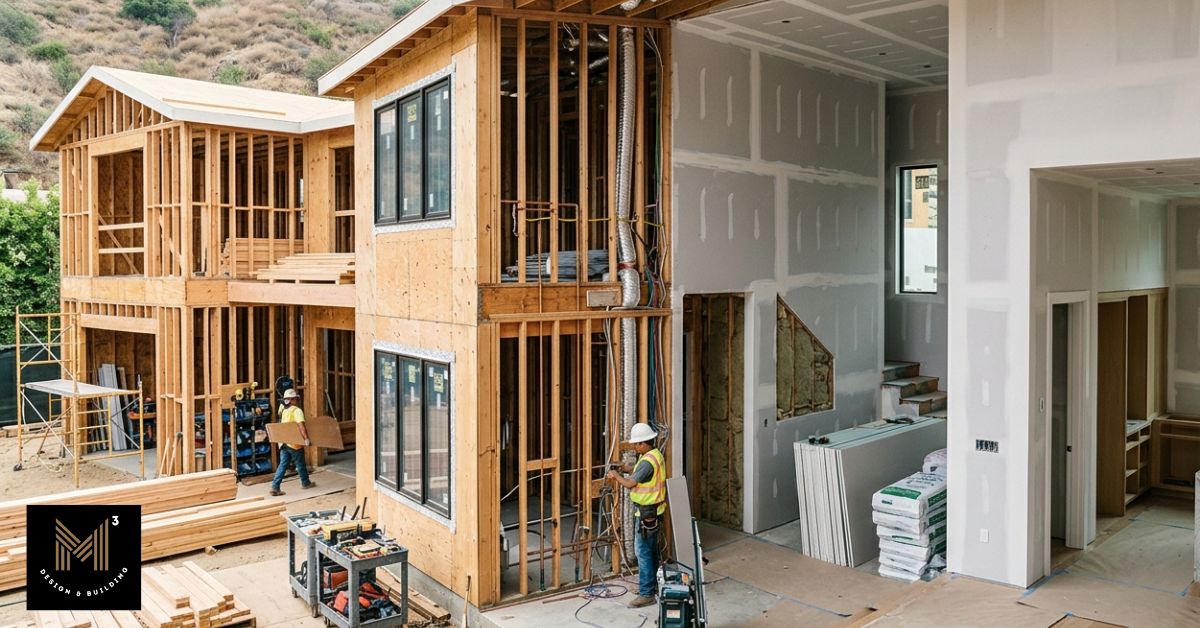
Construction schedules are affected by dependencies. Framing cannot close before required rough work and inspections are complete; one trade may be unable to start until another finishes; and a delayed material selection can hold up procurement and installation.
A construction manager maintains the project schedule as a working tool, tracks upcoming milestones, and coordinates the information, materials, trades, and approvals needed for the next phase. When an activity begins to slip, the effect on later work can be assessed before the delay spreads unnoticed through the schedule.
No management process can eliminate weather, agency delays, unforeseen site conditions, or every supply issue. The benefit is earlier visibility and a coordinated response rather than discovering the full impact after several activities have already been affected.
Benefit 3 — Centralized, Transparent Communication
Residential construction involves constant decisions between owners, architects, engineers, contractors, consultants, suppliers, and trades. Without a clear communication structure, questions can be missed, information can become inconsistent, and owners may spend significant time trying to determine who is responsible for the next step.
A construction manager establishes a clear process for organizing project information, tracking decisions, and coordinating communication between the different participants. Design revisions, budget updates, scheduling changes, and field questions can be reviewed through an organized process rather than through disconnected conversations.
This gives owners clearer visibility into what is changing, why it matters, and what decisions require their attention. It does not eliminate every misunderstanding, but it creates a more structured way to identify issues, assign responsibility, and keep the project team aligned.
Benefit 4 — Higher Quality Control Through Active Site Supervision
Construction issues are often easier and less disruptive to address while work is still visible. Once walls are closed, finishes are installed, or later trades build over earlier work, identifying and correcting problems can become more difficult.
A construction manager provides ongoing site oversight by observing progress, reviewing apparent differences between field conditions and project documents, and coordinating questions with the appropriate contractors, designers, engineers, or inspectors.
This visibility helps identify potential issues earlier, before they create larger coordination problems or require unnecessary corrective work. However, site oversight does not replace the responsibilities of licensed professionals, contractors, or municipal inspectors, and it cannot guarantee that every issue will be identified.
Benefit 5 — Coordinated Design, Engineering, and Construction Teams

Many construction problems originate from decisions that are made separately by different project participants. A design that looks practical on paper may create challenges during construction if structural, engineering, material, or installation considerations are not reviewed early enough.
Construction management helps connect design, engineering, and construction teams throughout the project so potential conflicts can be identified while solutions are still easier to evaluate.
Within M-Cubed Design & Building’s owner-led design-build approach, construction management connects planning, pre-construction, design, engineering, permitting, and construction instead of treating them as isolated stages. This coordination can be particularly valuable for custom homes and multi-unit residential projects where more systems and decisions must work together.
It does not eliminate every design or construction challenge, but it provides a clearer process for identifying and addressing issues as the project develops.
Benefit 6 — Reduced Owner Burden and Decision Fatigue
Managing a construction project directly requires more than approving designs and selecting finishes. Owners who self-manage often find themselves coordinating schedules, answering trade questions, tracking changes, reviewing documents, and resolving issues between different project participants.
A construction manager takes responsibility for organizing much of this day-to-day coordination while keeping the owner involved in the decisions that matter most. By establishing clearer processes early through pre-construction planning, the project team can identify scope, budget, scheduling considerations, and potential challenges before construction begins.
This allows owners to focus on major decisions rather than managing every communication thread and operational detail. It does not remove the owner’s role in approving important design, budget, or scope decisions, but it reduces the administrative burden involved in keeping a complex project moving.
Benefit 7 — Better Long-Term Value Protection

Construction decisions affect more than the immediate build. Materials, building systems, installation methods, and maintenance requirements can influence how a property performs long after construction is complete.
A construction manager helps keep long-term considerations part of project discussions by evaluating alternatives based on factors such as durability, maintenance, constructability, and intended use — not only initial cost.
This broader perspective helps owners understand the trade-offs behind major decisions and choose solutions that better align with their priorities. While construction management cannot guarantee future performance or financial returns, disciplined planning and oversight can help protect the quality and usefulness of the finished project over time.
When is hiring a construction manager worth it?
Construction management is not necessary for every residential project. Whether dedicated oversight is appropriate depends on the project’s scope, technical complexity, coordination requirements, delivery approach, and the owner’s preferred level of involvement—not project size alone.
Construction management may become more valuable when projects involve larger renovations, custom home construction, multi-unit residential development, multiple design or technical professionals, complex approval requirements, or extensive coordination across different phases of work. As the number of project participants and technical decisions increases, maintaining organized oversight may become more important throughout planning and construction.
Smaller or more straightforward residential projects may not require the same level of dedicated oversight, particularly when the scope, project participants, and decision-making responsibilities are limited. The appropriate arrangement depends on how design, construction, and owner responsibilities will be managed for that specific project.
Determining the appropriate level of construction management therefore requires a project-specific review of scope, complexity, coordination needs, and the proposed delivery structure.
How M-CUBED’s Construction Management Process Works
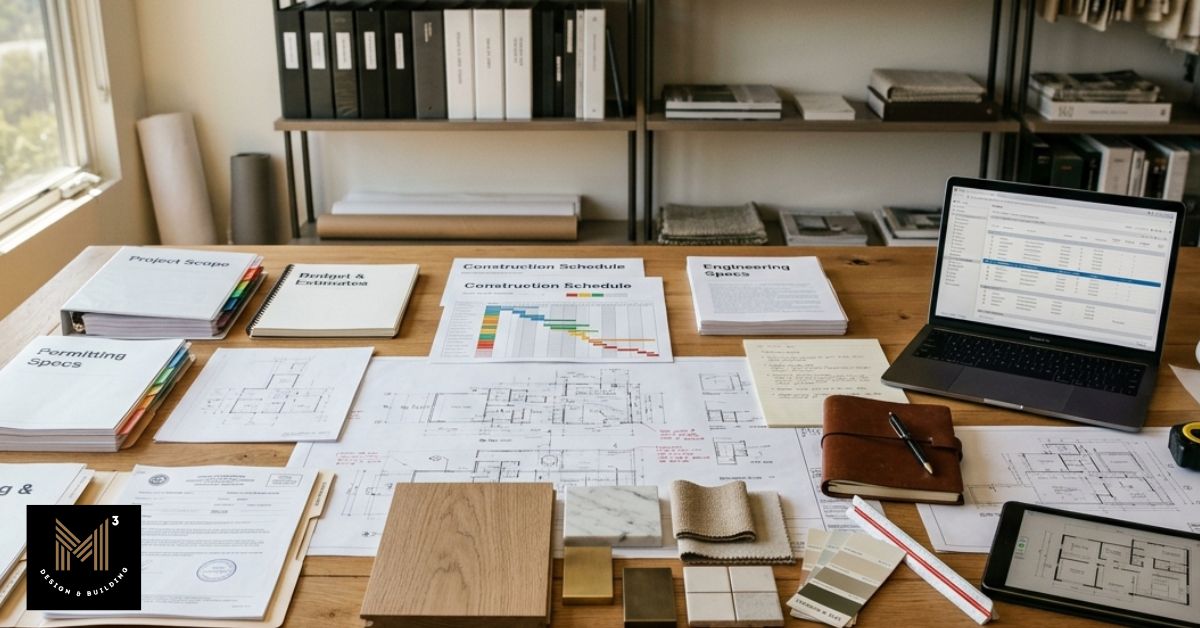
M-Cubed Design & Building provides construction management through an owner-led design-build process that connects budget development, scheduling, design coordination, engineering, permitting, trade management, and site oversight.
The process begins by reviewing the property, proposed scope, available plans, project stage, target budget, and the owner’s preferred level of involvement. From there, M-Cubed can identify where dedicated management is most useful, which responsibilities need a clear point of accountability, and how project information should move between the owner, design team, consultants, and construction team.
The service is adapted to the project rather than applied as the same package to every job. A custom home, major renovation, or multi-unit development may require broader oversight than a limited residential improvement.
Planning a residential or multi-unit project in Los Angeles? Call M-Cubed Design & Building at (310) 968-8239 to request a construction management consultation. Have the property address, proposed scope, current plans if available, target budget, and desired timeline ready for the initial discussion.
A Note on This Information
Construction-management responsibilities vary by contract, project-delivery method, licensing, project scope, and the professionals involved. The descriptions in this article are general educational information and do not define the services, authority, or responsibilities applicable to every project. Those responsibilities should be established in the project agreements before work begins.